

 By Becky Burrows · Reviewed by Paul Holmes · Updated 17 August 2026
Search 'ubiquinol coq10' on Google and you will find two names, dozens of brands, and no clear answer about which one you actually need. That confusion is fair: ubiquinol and CoQ10 are related, but they are not simply interchangeable products sitting on the same shelf. Ubiquinol is one of the two forms that coenzyme Q10 (CoQ10) takes in your body, and knowing which form you are looking at changes how well a supplement is absorbed, what dose makes sense, and whether the extra cost of a ubiquinol product is worth it for you.
This guide breaks down what each term actually means, what the research says about absorption and benefits, and how to decide between CoQ10 and ubiquinol based on your age, health, and budget. If you are building a broader longevity-focused routine, CoQ10 is one of several evidence-backed options covered in our Best Longevity Supplements UK (2026): 8 Science-Backed Compounds Ranked, but ubiquinol and CoQ10 deserve a closer look of their own.
In this article
- What's the Difference Between Ubiquinol and CoQ10?
- How CoQ10 Works in the Body
- Ubiquinol vs Ubiquinone: What the Absorption Evidence Actually Shows
- Benefits of CoQ10: What the Evidence Says
- Which Should You Take? A Practical Decision Guide
- How to Take CoQ10: Dosage, Timing, and Practical Tips
- Side Effects and Safety
- Conclusion
- FAQ
What's the Difference Between Ubiquinol and CoQ10?
Coenzyme Q10, usually shortened to CoQ10 (and sometimes typed as 'cq10'), is a vitamin-like compound that your body makes naturally and stores in every cell, with the highest concentrations in the heart, liver, kidneys, and muscles [1][2]. Inside your cells, CoQ10 exists in two interchangeable forms: ubiquinone, the oxidised form, and ubiquinol, the reduced, active form [2][9]. Your body constantly converts one into the other as part of normal cellular energy production.
So when people search for 'ubiquinol coq10' or 'coq10 ubiquinol', they are really asking the same question from two directions: is ubiquinol a different ingredient, or just a different form of the same thing? It is the latter. Every ubiquinol supplement is CoQ10. The difference is that ubiquinol supplements deliver the pre-converted, ready-to-use form directly, while standard CoQ10 (ubiquinone) supplements rely on your body to convert it after you swallow the capsule [3].
For most of adult life, that conversion happens efficiently and the distinction barely matters. It becomes more relevant with age, certain health conditions, and for people taking specific medications, which is why the 'ubiquinone vs ubiquinol' question tends to come up most often for people over 40, or those managing a health condition where CoQ10 levels run low.
Ubiquinol vs Ubiquinone at a Glance
| Feature | Ubiquinone (standard CoQ10) | Ubiquinol (active form) |
|---|---|---|
| Chemical state | Oxidised | Reduced, antioxidant-active |
| Needs conversion by the body? | Yes | No |
| Typical supplement dose | 30 to 200mg | 50 to 200mg |
| Best-studied context | Most heart failure trials, including Q-SYMBIO [6][7] | Absorption studies in older adults [3][4][5] |
| Usually the cheaper option? | Yes | No, typically 30 to 70% more expensive |
How CoQ10 Works in the Body
CoQ10's main job happens inside the mitochondria, the tiny structures inside almost every cell that generate energy in the form of ATP, or adenosine triphosphate [1][2]. Without adequate CoQ10, this electron transport process slows down, which is one reason low CoQ10 levels have been linked to fatigue and reduced exercise tolerance.
CoQ10 has a second, separate role as an antioxidant. In its ubiquinol form specifically, it helps neutralise free radicals and protect cell membranes, LDL cholesterol, and DNA from oxidative damage [2][9]. This dual role, energy production plus antioxidant defence, is why CoQ10 research spans everything from heart health to fertility to statin side effects, even though the strength of evidence varies considerably between these areas, as covered below.
Levels of CoQ10 in the body peak in your twenties and decline steadily with age. Certain medications, particularly statins, also reduce CoQ10 production, which is part of why CoQ10 supplements are so often discussed alongside cholesterol-lowering treatment [1][8].
This is also why CoQ10 sits within Naturecan's broader Longevity collection, alongside other mitochondrial and cellular-health ingredients such as NMN and resveratrol.
Ubiquinol vs Ubiquinone: What the Absorption Evidence Actually Shows
This is where a lot of ubiquinol marketing gets ahead of the science, so it's worth slowing down. The claim you will see everywhere is that ubiquinol is simply better absorbed than ubiquinone. The real picture is more mixed, and the ubiquinol benefits most consistently shown in research are concentrated in specific groups rather than universal to everyone.
Several studies do support a bioavailability advantage for ubiquinol, particularly in older adults. A widely cited study of men over 55 found that CoQ10 status improved more after two weeks of ubiquinol supplementation than after ubiquinone, and a related clinical trial was designed specifically to test whether older adults, who convert ubiquinone less efficiently, absorb ubiquinol more effectively [4]. A more recent crossover trial of a newer ubiquinol formulation also found substantially higher bioavailability than a standard ubiquinone formulation, again suggesting the biggest advantage may sit with people who have reduced conversion capacity, such as older adults and those with chronic illness [5].
However, a detailed review of the bioavailability literature found the picture is not so clear-cut. Some head-to-head studies, including a trial giving healthy adults single doses of each form, found no significant difference in how much CoQ10 reached the bloodstream [3]. The same review traced part of the 'ubiquinol is always better absorbed' claim back to an unfair comparison in the older literature: an early ubiquinone study used a poorly absorbed powdered formulation rather than the oil-suspended capsules sold today, which exaggerated the apparent gap between the two forms [3].
The most reasonable, evidence-led summary is this: ubiquinol appears to offer a genuine absorption advantage for some people, particularly those over 50 or 60 whose bodies convert ubiquinone to ubiquinol less efficiently, but it is not a universal rule that ubiquinol outperforms ubiquinone at every age or in every formulation [3][4][5]. For a younger, healthy adult taking a well-formulated ubiquinone supplement with food, the practical difference may be small.
There's a further wrinkle worth flagging, one that most articles on this topic skip entirely: formulation appears to matter more than which form you buy. A 2019 study comparing seven different CoQ10 preparations found that bioavailability varied far more by carrier lipid and solubilisation method than by whether the product was ubiquinone or ubiquinol, with a well-solubilised ubiquinone outperforming a standard oil-based ubiquinol in that particular comparison [13]. The same research found that regardless of which form people swallowed, most of the CoQ10 that ended up circulating in their blood was in the ubiquinol form anyway, since a healthy body converts it efficiently during digestion and absorption [13]. In practice, this means the softgel quality and solubilisation of a product, and whether you take it with food, may matter as much as, or more than, the redox form printed on the label.

Benefits of CoQ10: What the Evidence Says
CoQ10 benefits have been studied across several areas, with the evidence considerably stronger for some than others. Being upfront about that difference is part of choosing a supplement that will actually do something useful for you.
Heart Health

The strongest evidence base for CoQ10 sits here. The Q-SYMBIO trial, a randomised, double-blind study of over 400 people with chronic heart failure, found that adding CoQ10 to standard treatment reduced cardiovascular death and heart failure related hospital stays over two years [6]. A more recent meta-analysis of randomised controlled trials confirmed that CoQ10 supplementation improves left ventricular ejection fraction, a measure of how effectively the heart pumps, regardless of heart failure severity [7].
It's worth being specific about which form that evidence actually used: Q-SYMBIO, and most of the other outcome trials underpinning CoQ10's heart-health case, used the standard oxidised ubiquinone formulation, not ubiquinol [6][13]. That's a genuine reason to see ubiquinone as a well-evidenced choice for heart health specifically, rather than simply the cheaper fallback option.
This is the context in which most CoQ10 benefits claims for the heart are grounded, and it's also why CoQ10 is often recommended alongside a wider heart health routine. If heart health is your main reason for looking at a Q10 supplement, it's worth browsing Naturecan's Heart Health Supplements collection, which also includes omega-3 and other nutrients commonly paired with CoQ10 for cardiovascular support.
Statin-Associated Muscle Symptoms

This is one of the most searched CoQ10 questions, and also one of the most honestly mixed. Statins reduce the body's own CoQ10 production, which is the theoretical basis for taking a supplement alongside them [1][8]. Some randomised trials and meta-analyses have found CoQ10 meaningfully reduces statin-related muscle pain [8], but a major NIH-backed research summary is more cautious, concluding that the overall scientific evidence does not support the idea that CoQ10 can reduce muscle pain caused by statins, despite individual study results varying [1]. If you are taking statins and experiencing muscle symptoms, CoQ10 is a reasonable thing to raise with your doctor, but it should not be treated as a guaranteed fix.
Energy and Antioxidant Support

As the compound directly involved in mitochondrial ATP production, CoQ10's role in cellular energy is well established mechanistically, even though translating that into a noticeable everyday energy boost varies from person to person [2][9]. Ubiquinol specifically has documented antioxidant properties, helping protect LDL cholesterol and cell membranes from oxidative damage [2].
NMN is another longevity-focused compound frequently discussed alongside CoQ10 for cellular energy, though it works through a different pathway (raising NAD+ levels rather than the electron transport chain). Our Best NMN Supplements in the UK (2026) guide covers what the evidence actually shows there.
CoQ10 Benefits for Women

CoQ10 has a growing evidence base in reproductive health. Research suggests CoQ10 supplementation may support mitochondrial function within the ovaries, and several clinical studies and systematic reviews report improvements in egg quality, ovarian response, and embryo quality in women undergoing fertility treatment, particularly those with diminished ovarian reserve or at an older reproductive age [10][11][12].
This is genuinely promising research, but it is not the same as CoQ10 being a fertility treatment. Current studies are typically run alongside IVF protocols under clinical supervision, and CoQ10 supplements sold on the high street are not licensed to treat infertility or any related condition. Anyone exploring CoQ10 for fertility reasons should raise it with their GP or fertility specialist rather than self-directing treatment.
If you're researching hormonal or reproductive health more broadly, two of our most recent guides cover related but distinct territory: What Is Inositol? Benefits, Uses & How to Take Myo-Inositol looks at a nutrient often discussed alongside CoQ10 for PCOS and fertility, and Best Supplements for PMS & Period Cramps covers magnesium, vitamin B6, omega-3 and zinc for cycle-related symptoms.
Which Should You Take? A Practical Decision Guide
With the evidence in mind, here is the honest answer to the 'ubiquinol vs CoQ10, which one should I take' question: it depends on your age, why you're taking it, and how much you want to spend, more than any single general rule.
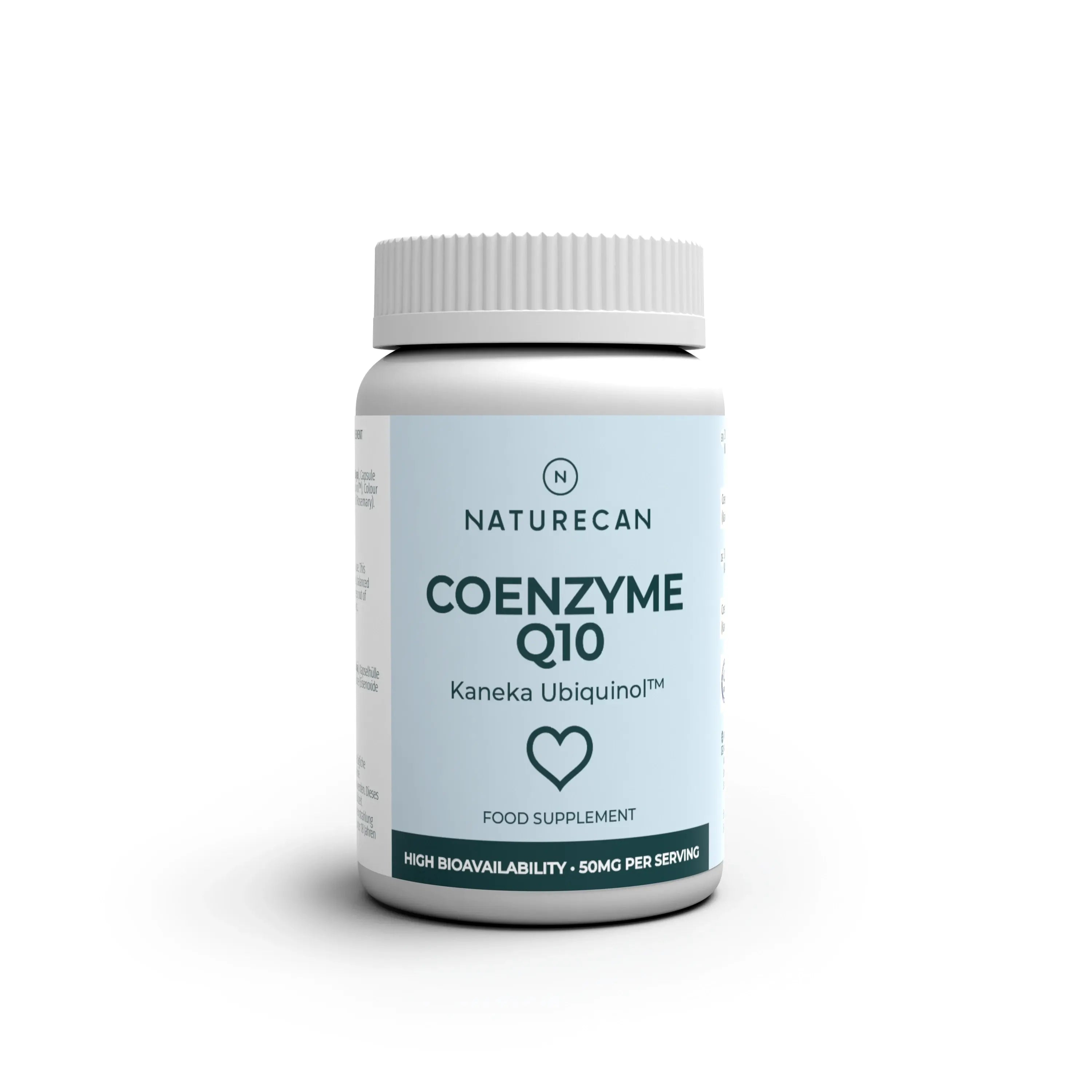
Naturecan's Q10 Capsules use Kaneka Ubiquinol, the branded, clinically studied ubiquinol ingredient behind much of the bioavailability research referenced above. So if the guide below points you toward ubiquinol, that is the form used here.
Which Form Suits You?
| Your situation | Recommended form | Why |
|---|---|---|
| Over 50 to 60, or noticing low energy despite a consistent CoQ10 routine | Ubiquinol | Conversion efficiency declines with age, and this is the group in whom ubiquinol's absorption advantage is most consistently shown [4][5] |
| Taking statins | Either, discussed with your GP first | CoQ10 depletion from statins is well documented, though evidence for symptom relief is mixed [1][8] |
| Exploring CoQ10 alongside fertility treatment | As directed by a fertility specialist | Most supporting research uses clinically dosed, supervised protocols rather than unsupervised, over-the-counter use [10][11][12] |
| Wanting the best CoQ10 supplement for general daily wellbeing without overspending | Standard CoQ10 (ubiquinone), 30 to 100mg | This is where most general CoQ10 research sits, and it's the more budget-friendly option for ongoing use |
One thing matters regardless of which row applies to you: choose an oil-based softgel and take it with food. Research comparing seven different CoQ10 preparations found that carrier oil and solubilisation technique affected absorption more than the redox form itself [13].
Featured product
Naturecan Q10 Capsules
Naturecan's Q10 Capsules use Kaneka Ubiquinol™, the branded, clinically studied ubiquinol ingredient behind much of the bioavailability research referenced throughout this guide [3][4][5]. If the decision guide above points you toward ubiquinol, such as if you're over 50, take statins, or simply want the pre-converted, active form, this is the form used here.
Shop Q10 CapsulesCoQ10 rarely works in isolation. A handful of other nutrients are frequently taken alongside it for related goals: Vegan Omega-3 for cardiovascular and brain support, Magnesium Bisglycinate 3:1 for muscle and nervous system function, which is useful if statin-related muscle symptoms are part of why you're here, and Resveratrol Supplement for an antioxidant profile that complements ubiquinol's role in fighting oxidative stress. None of these are required alongside CoQ10, but they cover related ground if you're building out a wider longevity-focused routine.
How to Take CoQ10: Dosage, Timing, and Practical Tips
Whichever form you choose, a few practical points apply to virtually every CoQ10 or ubiquinol supplement.
- Take it with food, ideally a meal containing some fat. CoQ10 is fat-soluble, and studies consistently show better absorption when it's taken alongside a meal rather than on an empty stomach [3][9].
- Give it time. Unlike a vitamin C top-up, CoQ10's effects build gradually as cellular levels rise. Most studies measuring meaningful change run for at least four to eight weeks, and some heart failure research followed participants for two years [6].
- Start at a sensible dose. Common doses range from 30mg for general daily use up to 100 to 300mg in the clinical studies referenced throughout this guide, with higher doses generally reserved for specific medical contexts under supervision [6][8].
- Match the dose to the evidence, not the label. If you're taking CoQ10 for a specific reason, such as alongside statins or fertility treatment, ask your doctor or specialist what dose the relevant research actually used, rather than defaulting to whatever a product suggests.
Side Effects and Safety
CoQ10, in either form, has a strong safety record. A major NIH research summary reports no serious side effects, with occasional mild issues such as trouble sleeping or digestive upset [1][9]. Side effects reported in supplement studies and product literature include nausea, stomach discomfort, headache, and, rarely, an allergic rash [9].
The interaction worth knowing about involves warfarin, a blood-thinning medication. CoQ10's chemical structure resembles vitamin K, and case reports and clinical guidance suggest it may reduce warfarin's anticoagulant effect, meaning blood-clotting tests may need closer monitoring if you take both [1][9].
CoQ10 may also have a mild blood-pressure-lowering effect, so combining it with blood pressure medication is generally fine but worth mentioning to your doctor, particularly if your blood pressure already runs low [9].
There's no specific medical reason to avoid CoQ10 in most healthy adults, but as with any supplement, it should not be started or stopped alongside prescribed medication without a quick conversation with a pharmacist or GP, especially if you're pregnant, breastfeeding, or managing a diagnosed health condition [1][9].
Conclusion
Ubiquinol and CoQ10 are not competing products; they are two forms of the same nutrient, and the right choice comes down to your age, health situation, and what you're hoping to achieve. If you're under 50 and generally healthy, standard CoQ10 is a well-evidenced, affordable place to start. If you're older, take statins, or have a specific reason to prioritise absorption, ubiquinol, such as the Kaneka Ubiquinol used in Naturecan's Q10 Capsules, is worth the extra cost. Whichever you choose, take it consistently with food, give it several weeks to show any effect, and check with your doctor first if you take warfarin, have low blood pressure, or are pregnant or breastfeeding. Used sensibly and with realistic expectations about the evidence, CoQ10 remains one of the better-studied supplements for supporting long-term energy and heart health.
Disclaimer
This article is for general information and does not constitute medical advice. No medical claims are made for any product mentioned, and no health claims referenced here are authorised for CoQ10 or ubiquinol under UK or EU law. The research summarised above reflects the current state of evidence rather than a guaranteed outcome for any individual, and CoQ10 supplements are not a substitute for fertility treatment or any other medical treatment. If you are pregnant, breastfeeding, taking medication (particularly warfarin or blood pressure medicine), or living with a medical condition, speak to your doctor before taking CoQ10 or any new supplement.
FAQ
What's the difference between ubiquinol and ubiquinone?
Ubiquinone and ubiquinol are two forms of the same nutrient, coenzyme Q10. Ubiquinone is the oxidised form, and your body converts it into ubiquinol, the reduced, antioxidant-active form, before it can be used in some of CoQ10's key roles [2][9]. Standard CoQ10 supplements typically contain ubiquinone; ubiquinol supplements deliver the already-converted, active form directly.
Does CoQ10 help with fertility?
Research suggests CoQ10 may support mitochondrial function in developing eggs, and several clinical studies report improved egg and embryo quality in women having fertility treatment, particularly those with reduced ovarian reserve [10][11][12]. CoQ10 supplements are not a licensed fertility treatment, though, and anyone considering it for this reason should speak to a fertility specialist about the dose and timing used in the relevant research.
What is Kaneka ubiquinol?
Kaneka Ubiquinol is a branded ubiquinol ingredient manufactured by the Japanese company Kaneka Corporation. It is the specific ubiquinol form used in much of the bioavailability and clinical research referenced in this guide, and it's also the ingredient used in Naturecan's Q10 Capsules.
Ubiquinol vs CoQ10, which one should I take?
For most healthy adults under 50, standard CoQ10 (ubiquinone) is a reasonable, well-evidenced, and more budget-friendly choice. Ubiquinol tends to make more sense over 50 or 60, when the body's ability to convert ubiquinone declines, or if you have a specific health reason to prioritise absorption [3][4][5]. See the decision guide above for a fuller breakdown.
What's the best time to take CoQ10?
There's no strict best time of day, but taking CoQ10 with a meal that contains some fat improves absorption, since it's a fat-soluble compound [3][9]. Many people take it in the morning alongside breakfast simply as a routine, though evening works equally well if that suits your schedule better.
What medications should not be taken with CoQ10?
The main medication to flag is warfarin, since CoQ10 may reduce its blood-thinning effect [1][9]. CoQ10 can also have a mild additional blood-pressure-lowering effect when combined with blood pressure medication. If you take either of these, or any other prescribed medication, check with your GP or pharmacist before starting CoQ10.
What is CoQ10 good for?
CoQ10's best-evidenced use is supporting heart health, particularly in people with heart failure, where clinical trials show improvements in heart pumping efficiency and reduced hospitalisation [6][7]. It's also studied for cellular energy production, antioxidant protection, and, in the case of ubiquinol specifically, women's reproductive health [2][10]. Evidence for statin-related muscle pain and general blood pressure is more mixed [1][8].
What does CoQ10 do?
CoQ10 plays a central role in how your cells produce energy, acting as an essential part of the process that generates ATP inside mitochondria [1][2]. It also functions as an antioxidant, particularly in its ubiquinol form, helping protect cells, LDL cholesterol, and DNA from oxidative damage [2][9].
References
- National Center for Complementary and Integrative Health (NCCIH) (2019) Coenzyme Q10. Available at: https://www.nccih.nih.gov/health/coenzyme-q10 (Accessed: 11 August 2026).
- National Library of Medicine, StatPearls (2024) Coenzyme Q10. Available at: https://www.ncbi.nlm.nih.gov/books/NBK531491/ (Accessed: 11 August 2026).
- Pravst, I. et al. (2020) 'Bioavailability of Coenzyme Q10: An Overview of the Absorption Process and Subsequent Metabolism', Antioxidants, 9(5), p.386. Available at: https://www.mdpi.com/2076-3921/9/5/386 (Accessed: 11 August 2026).
- ClinicalTrials.gov (2016) Bioavailability of Ubiquinone and Ubiquinol in Older Adults (NCT03020680). Available at: https://clinicaltrials.gov/study/NCT03020680 (Accessed: 11 August 2026).
- PMC (2026) A Randomised, Double-Blind, Two-Treatment, Two-Period, Crossover Study Investigating the Systemic Bioavailability of a Novel Cocrystal Ubiquinol Formulation Compared with a Ubiquinone Formulation in Healthy Adults. Available at: https://pmc.ncbi.nlm.nih.gov/articles/PMC12965043/ (Accessed: 11 August 2026).
- Mortensen, S.A. et al. (2014) 'The Effect of Coenzyme Q10 on Morbidity and Mortality in Chronic Heart Failure: Results from Q-SYMBIO', JACC: Heart Failure. Available at: https://www.jacc.org/doi/10.1016/j.jchf.2014.06.008 (Accessed: 11 August 2026).
- PMC (2024) Efficacy and safety of coenzyme Q10 in heart failure: a meta-analysis of randomized controlled trials. Available at: https://pmc.ncbi.nlm.nih.gov/articles/PMC11515203/ (Accessed: 11 August 2026).
- PMC (2024) Effects of coenzyme Q10 supplementation on myopathy in statin-treated patients: a systematic review and meta-analysis. Available at: https://www.ncbi.nlm.nih.gov/pmc/articles/PMC12554813/ (Accessed: 11 August 2026).
- WebMD (2025) Coenzyme Q10 (CoQ10, Ubiquinol): Uses, Side Effects, Interactions, Pictures, Warnings and Dosing. Available at: https://www.webmd.com/drugs/coenzyme-q10-coq10-ubiquinol (Accessed: 11 August 2026).
- Frontiers in Cell and Developmental Biology (2025) Exploring the protective effects of coenzyme Q10 on female fertility. Available at: https://www.frontiersin.org/journals/cell-and-developmental-biology/articles/10.3390/fcell.2025.1633166/full (Accessed: 11 August 2026).
- Annals of Medicine (2024) Clinical evidence of coenzyme Q10 pretreatment for women with diminished ovarian reserve undergoing IVF/ICSI: a systematic review and meta-analysis. Available at: https://www.tandfonline.com/doi/full/10.1080/07853890.2024.2389469 (Accessed: 11 August 2026).
- Xu, Y. et al. (2018) 'Pretreatment with coenzyme Q10 improves ovarian response and embryo quality in low-prognosis young women with decreased ovarian reserve: a randomized controlled trial', Reproductive Biology and Endocrinology. Available at: https://www.ncbi.nlm.nih.gov/pmc/articles/PMC5870379/ (Accessed: 11 August 2026).
- López-Lluch, G. et al. (2019) 'Bioavailability of coenzyme Q10 supplements depends on carrier lipids and solubilization', Nutrition, 57, pp.133-140. Available at: https://doi.org/10.1016/j.nut.2018.05.020 (Accessed: 12 August 2026).


