

 By Becky Burrows · Reviewed by Paul Holmes · Updated 5 August 2026 · 18 min read
If you've spent any time on PCOS or fertility forums, you've probably come across inositol, usually recommended for hormone balance, ovulation or blood sugar control, and often mentioned in the same breath as metformin or berberine. But what are the inositol benefits actually worth paying attention to, which form should you take (myo-inositol or D-chiro-inositol), and how does it really compare to the options your GP might already have mentioned? This guide breaks down what the evidence says, walks through practical dosing, and looks at where Naturecan's range fits in.
In This Article
- Which reason brought you here, and how strong the evidence actually is for each one.
- What inositol actually is, including the myo-inositol and D-chiro-inositol forms, and why "vitamin B8" is a bit of a myth.
- The science behind how inositol affects insulin, hormones and mood, and where marketing overstates the evidence.
- How to choose a form and dose, plus common mistakes to avoid.
- Why choose Naturecan's Myo-Inositol Capsules, and what makes them a clean, precisely dosed option.
- What the evidence really shows for PCOS, weight, blood sugar and mood, and how myo-inositol compares to metformin and berberine.
- Side effects and safety, a realistic timeline for results, and answers to 9 common questions.
Which Reason Brought You Here?
Inositol gets recommended for a lot of different things, and the strength of the evidence varies a lot depending on which one applies to you. Find your reason below, then jump straight to the section with the actual evidence and a realistic timeline, not just a promise.
| Your goal | Evidence strength | Realistic timeframe | Where to look |
|---|---|---|---|
| PCOS, insulin resistance or irregular cycles | Strong, well-studied | Around 3 months of daily use | Myo-inositol for PCOS |
| Trying to conceive | Limited and mixed | 3+ months, doctor-supervised | Myo-inositol for PCOS (fertility caveat) |
| Weight or blood sugar management | Modest | Several weeks to a few months, alongside diet and exercise | Inositol for weight and blood sugar |
| Mood, anxiety or low mood | Weak and inconsistent at typical doses | Not established at wellness-level doses | Inositol powder for mood and anxiety |
| Comparing inositol to metformin or berberine | Emerging, condition-specific | Discuss with your doctor before switching anything | Myo-Inositol vs Metformin vs Berberine |
If none of these quite match what brought you here, or you'd rather get the full picture first, keep reading from the top.
What Is Inositol?

Inositol is a naturally occurring, sugar-like compound found in your cells and in foods like citrus fruit, beans, nuts and whole grains[1]. You'll often see it labelled vitamin B8, but that's a little misleading: your liver and kidneys make inositol from glucose, so it doesn't meet the definition of an essential vitamin the way vitamin C or B12 do[1,2].
There are nine different forms of inositol, but two matter for supplements. Myo-inositol makes up around 99% of the inositol in your body and is the form most studied for PCOS, fertility and mood. D-chiro-inositol plays more of a role in glucose and insulin regulation[3]. Most products sold as inositol powder or inositol tablets contain myo-inositol alone, or myo-inositol combined with a small amount of D-chiro-inositol.
This is what sets inositol apart from other options marketed as a pcos supplement, such as berberine or metformin, which work mainly on insulin signalling rather than the broader hormonal and neurological pathways inositol is involved in. We compare the three directly further down. If you're building a wider supplement routine, our best supplements for women collection covers other evidence-backed options for hormonal and cycle health.
Featured product
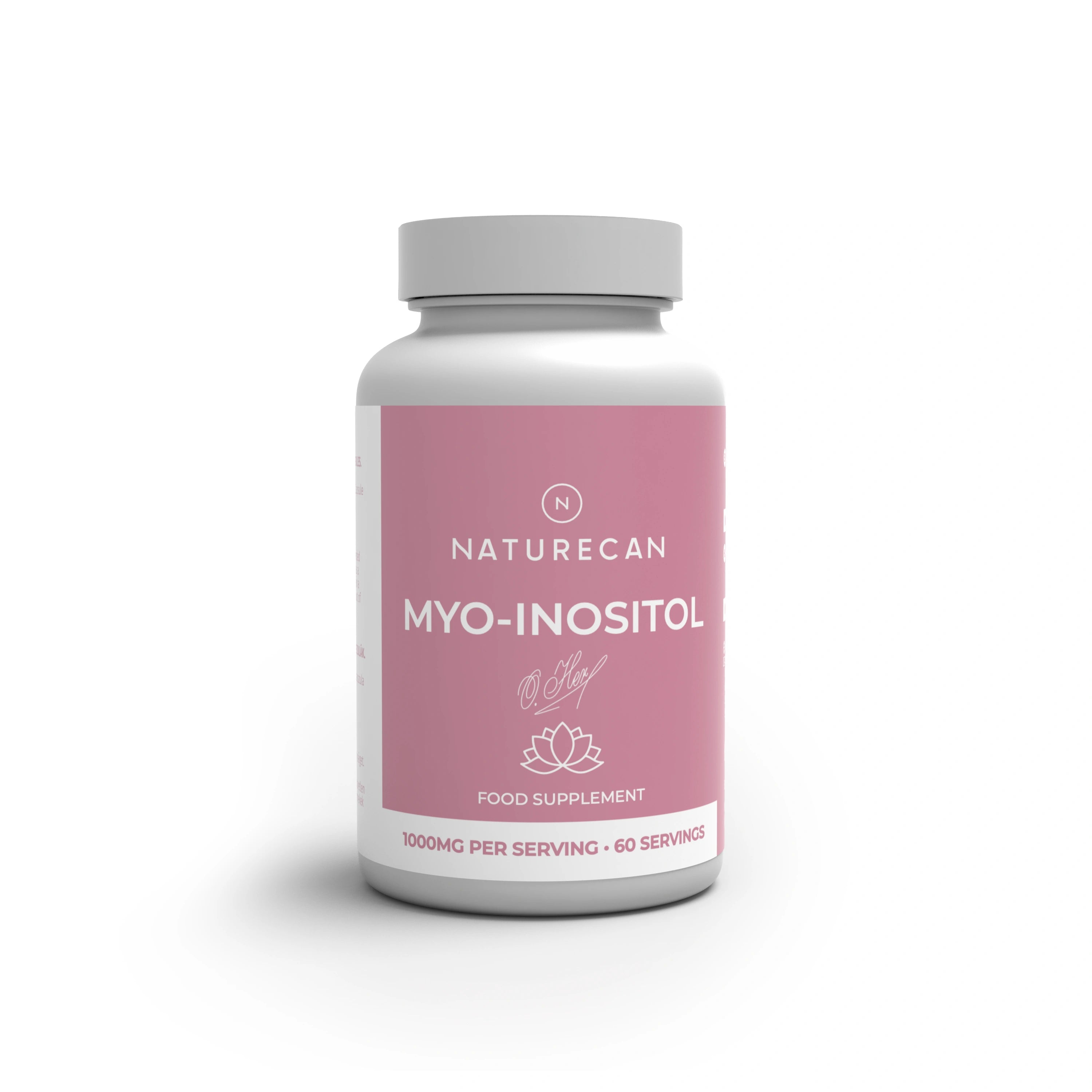
Myo-Inositol Capsules
A clean, convenient way to take myo-inositol. Naturecan Myo-Inositol Capsules provide 1,000mg of pure myo-inositol per vegan capsule. The formula contains no fillers, binders or bulking agents, and every batch is independently tested for purity and potency.
View Myo-Inositol Capsules“I recommend Naturecan Myo-inositol to women who are struggling with PCOS, irregular periods or hormonal imbalances – that’s why I started taking it myself. What convinced me is that it has been independently tested and actually contains the required amount of active ingredient, so there’s no need to compromise on quality. If you want to support your cycle, hormones and metabolism naturally, I wholeheartedly recommend this!”
Olga Herceg • Nutritionist & Keto Diet Expert | CNM London
How Inositol Works
Inositol's main job is acting as a building block for phosphatidylinositols, a family of molecules embedded in your cell membranes that relay signals from hormones, insulin and neurotransmitters into the cell[1,2]. This "second messenger" role is why inositol shows up in research on such different topics at once: insulin sensitivity, ovarian function and mood.
For insulin signalling specifically, inositol (particularly its D-chiro-inositol form) is part of the pathway that tells cells to take up glucose from the blood in response to insulin[3]. In women with PCOS, this pathway is often less responsive than it should be, a state usually described as insulin resistance, which is one reason inositol has been studied so heavily as a pcos supplement alongside metformin[4,5].
For mood, inositol is a precursor in the same signalling pathway used by serotonin receptors in the brain, which is the theoretical basis for the psychiatric trials covered below, though the real-world evidence here turns out to be more mixed than the mechanism alone suggests[6].
Myth vs Evidence: What Marketing Gets Wrong About Inositol
Inositol is heavily marketed, and some of what circulates online overstates what the research actually supports. Here's a straight comparison.
What you might have heard
"Inositol is vitamin B8"
What the evidence actually shows
Your body makes it from glucose. It doesn't meet the definition of an essential vitamin[1,2].
What you might have heard
"More D-chiro-inositol is always better"
What the evidence actually shows
Most PCOS research uses a 40:1 myo-to-D-chiro ratio. Formulations with too much D-chiro-inositol relative to myo-inositol have been linked to worse egg quality in some research[3].
What you might have heard
"Myo-inositol can replace metformin"
What the evidence actually shows
Adding myo-inositol to metformin improved insulin resistance scores in more patients than metformin alone in one phase III trial[7], and a network meta-analysis found inositol combinations compared favourably with metformin on some measures[8]. That's not the same as a like-for-like replacement, and any change to a prescribed medication needs a doctor's input.
What you might have heard
"Inositol powder is a proven anxiety treatment"
What the evidence actually shows
Early small trials using 12 to 18g a day looked promising[6,9], but a later meta-analysis pooling these and further trials found no significant effect on depression, anxiety or OCD symptoms overall[6].
What you might have heard
"Inositol is a proven fertility treatment"
What the evidence actually shows
A 2018 Cochrane review concluded the evidence was too limited to recommend myo-inositol as a standalone fertility treatment[10].
What you might have heard
"Inositol supplements cause noticeable weight loss"
What the evidence actually shows
A 2022 meta-analysis found a statistically significant but modest reduction in BMI, strongest in people who already had PCOS or insulin resistance[11].
How to Choose and Use Myo-Inositol: Dosage and Timing
- Choosing your form and ratio. Most PCOS research uses either myo-inositol alone, often as inositol powder dissolved in water, or myo-inositol combined with D-chiro-inositol in a 40:1 ratio, which mirrors the natural balance of the two forms found in healthy ovarian tissue[3]. Formulations with too much D-chiro-inositol relative to myo-inositol have actually been linked to worse egg quality in some research, so more D-chiro-inositol is not automatically better[3]. Inositol tablets tend to be more convenient for daily use, while inositol powder makes it easier to reach the higher gram-level doses used in most trials.
- Dosage and timing. The standard studied dose for PCOS is 2g of myo-inositol taken twice daily (4g total), usually alongside 400mcg of folic acid, for at least three months before assessing results[4,5]. Doses used in mood-related trials were considerably higher, up to 12 to 18g a day, and were run under clinical supervision. These are research protocols rather than general recommendations, and higher doses raise the chance of mild digestive side effects[6].
- Combining with other nutrients. Inositol is sometimes paired with choline in older-style supplement blends, often labelled choline inositol, traditionally marketed as a "lipotropic" formula to support fat metabolism in the liver. The evidence for this specific combination is much thinner than the PCOS-focused research on myo-inositol alone, so it's worth treating choline inositol blends as a different product category rather than an alternative to standard myo-inositol supplementation. For mood-related use, some people pair inositol with Naturecan's NAC supplement (N-acetylcysteine), another supplement studied for OCD-spectrum symptoms; our NAC benefits article covers how that nutrient works if you'd like to compare the two.
- Being realistic about timelines. Most PCOS trials ran for at least three months before assessing ovulation, insulin or androgen changes, and the psychiatric trials mentioned above used doses far higher than typical wellness supplements. Treat inositol as a nutrient you build up consistently rather than one you take occasionally when symptoms flare.
Common mistakes to avoid
- Assuming that every supplement serving replicates a clinical research protocol. Studies have investigated a range of doses, often for specific populations under professional supervision. Always check the amount per serving and speak to a healthcare professional before taking more than the label recommends.
- Expecting a mood or anxiety benefit at typical 2 to 4g wellness doses, when the psychiatric trials used 12g or more under supervision.
- Stopping after a few weeks: most PCOS trials ran for at least three months before assessing ovulation or insulin changes.

Why Choose Naturecan’s Myo-Inositol Capsules?
If you prefer the convenience of capsules to measuring and mixing inositol powder, Naturecan provides a simple, precisely labelled option. Each vegan capsule contains 1,000mg of pure myo-inositol, with no unnecessary fillers, binders or bulking agents. Every batch is independently tested for purity and potency and produced under Good Manufacturing Practice standards, giving you confidence that the amount on the label is the amount in each capsule. The single-ingredient formula also makes it easy to understand exactly what you are adding to your routine.
Each pack contains 60 capsules. Follow the recommended serving on the label and speak to a healthcare professional before considering a higher intake for a particular health goal.
Benefits of Inositol: What the Evidence Actually Says
Myo-inositol for PCOS: what the evidence says
Myo-inositol (also written as myo inositol) is the best-studied form for PCOS, and the research covers several angles:
- Multiple randomised trials show myo-inositol improves insulin sensitivity, measured through HOMA-IR, in a way that compares favourably with metformin but with fewer digestive side effects[4,5].
- A phase III randomised trial found that adding myo-inositol to metformin improved insulin resistance scores in significantly more patients (75%) than metformin alone (61%) after 24 weeks[7].
- The same body of research links myo-inositol to more regular ovulation and reduced androgen markers such as testosterone, with knock-on improvements in symptoms like acne and hirsutism[8].
- However, when it comes specifically to subfertility and live birth rates, a 2018 Cochrane review concluded the evidence was too limited to recommend myo-inositol as a standalone fertility treatment[10].
Inositol for weight and blood sugar: what the evidence says
This is where inositol weight loss claims need the most nuance:
- A 2022 systematic review and meta-analysis of 15 randomised trials found inositol supplementation produced a statistically significant reduction in BMI, though the researchers were clear the effect was modest[11].
- The effect was strongest in people who already had PCOS, insulin resistance, or were overweight, and weaker in people with a normal BMI to begin with[11].
- Myo-inositol specifically outperformed other inositol forms for BMI reduction in the same analysis[11].
- The researchers were explicit that inositol works best as an adjunct to diet and exercise, not as a standalone approach to weight loss[11].
Inositol powder for mood and anxiety: what the evidence says
Small early trials using high-dose inositol powder generated real excitement, but the full picture is more cautious:
- Early double-blind trials using 12 to 18g of inositol daily found potential benefits comparable to prescription medications for panic disorder and OCD, with minimal reported side effects[6,9].
- However, a 2014 meta-analysis pooling these and later randomised trials found no statistically significant effect of inositol on depression, anxiety or OCD symptoms overall[6].
- The honest takeaway is that early results were promising but haven't held up consistently once more trials were pooled together, so inositol shouldn't be relied on as a substitute for evidence-based mental health treatment[6].
Choline inositol and other combinations
You may also come across choline inositol supplements, an older combination sometimes marketed as a "lipotropic" formula for liver and fat metabolism support. This pairing has far less PCOS-specific or fertility-specific research behind it than myo-inositol alone, so it's better thought of as a separate supplement category than a substitute for standard myo-inositol dosing.
Who benefits most
- The strongest evidence is for women with PCOS, particularly around insulin sensitivity, ovulation frequency and androgen markers.
- People with insulin resistance or a higher BMI alongside PCOS tend to see more noticeable metabolic benefits than those with a normal BMI[11].
- If you're navigating hormonal changes around perimenopause rather than PCOS specifically, our best natural supplements for menopause blog covers other evidence-backed options for that stage of life, including Naturecan's Menopause Support Capsules.

Myo-Inositol vs Metformin vs Berberine: How the Options Compare
Because inositol, metformin and berberine all influence insulin signalling, they're frequently compared to each other on PCOS forums. Here's what a 2021 network meta-analysis of 22 trials, alongside the phase III trial referenced above, actually found when the options were measured against each other[7,8].
- Type
- Naturally occurring compound, available over the counter
- Menstrual cycle regularity
- Associated with a notably greater improvement than metformin alone in a network meta-analysis[8]
- Insulin resistance (HOMA-IR)
- Comparable or favourable versus metformin alone in several trials[4,7]
- Total testosterone / androgens
- Reduced in combination therapy, similar direction of effect to metformin combinations[8]
- Common side effects
- Mild digestive upset, generally well tolerated[4,5]
- Needs a prescription
- No
- Type
- Prescription-only pharmaceutical
- Menstrual cycle regularity
- Established benefit, the usual comparison point
- Insulin resistance (HOMA-IR)
- Established first-line benefit
- Total testosterone / androgens
- Established benefit
- Common side effects
- Nausea, diarrhoea and stomach upset are common
- Needs a prescription
- Yes
- Type
- Plant-derived compound, available over the counter
- Menstrual cycle regularity
- Evidence more limited and mixed than for inositol or metformin[8]
- Insulin resistance (HOMA-IR)
- Some evidence of benefit, though less extensively studied[8]
- Total testosterone / androgens
- Evidence more limited[8]
- Common side effects
- Digestive side effects reported, less consistently studied
- Needs a prescription
- No
None of this means one option is universally "better". The right comparison depends on which outcome matters most to you, and metformin remains a prescription medicine that requires medical supervision to start, stop or combine with anything else. If you're already taking metformin, or considering berberine alongside it, that's a conversation for your GP or endocrinologist, not something to decide from a supplement label.
Side Effects and Safety

At the standard studied dose of around 4g a day, inositol is generally very well tolerated, with most randomised trials reporting no significant side effects[1,2,11]. At much higher doses, particularly the 12 to 18g a day used in some psychiatric research, mild digestive side effects such as nausea, bloating and diarrhoea become more common[7]. No significant drug interactions have been reported to date, though inositol's effect on insulin sensitivity is worth flagging to your doctor if you're already taking blood sugar medication such as metformin[7].
For pregnancy specifically, myo-inositol (typically 4g daily alongside folic acid) has been studied for reducing the risk of gestational diabetes, though the certainty of this evidence is still described as low to moderate[12,13].
When to speak to a doctor first
- If you're pregnant, breastfeeding, or trying to conceive.
- If you take insulin, metformin or other blood sugar medication, or are considering switching from a prescribed treatment.
- If you have a diagnosed mood disorder such as bipolar disorder.
- If you're considering doses above 4g/day for an extended period without medical supervision.
Quick Reference: Studied Doses at a Glance

This is a summary of what's typically used in the research above, not personalised dosing advice. Check with a pharmacist or GP before starting, especially if you're pregnant, trying to conceive, or on other medication.
| Use case | Typically studied dose | Best evidence for |
|---|---|---|
| Myo-inositol (PCOS) | 2g twice daily (4g total) | Insulin resistance, ovulation, androgens |
| Myo + D-chiro-inositol (40:1) | 4g myo + approx. 100mg D-chiro daily | PCOS hormonal balance |
| Myo-inositol (pregnancy) | 2g twice daily with folic acid, doctor-supervised | Consult your doctor - not for self-supplementation. |
| Inositol powder (mood, research only) | 12 to 18g/day, clinical settings only | Panic/OCD in small trials; evidence now mixed |
| Inositol (weight/BMI) | 2 to 4g/day alongside diet and exercise | Modest BMI reduction |
Symptom-to-Timeline Matrix: What to Realistically Expect, and When
The sections above cover the evidence in detail. This table pulls the practical question, how long before you'd know if it's working, into one place.
| Symptom or goal | What's actually been studied | Typical time before assessing | Evidence strength |
|---|---|---|---|
| Irregular cycles / ovulation | 4g/day myo-inositol, 3+ months | Around 3 months | Strong |
| Insulin resistance markers (HOMA-IR) | 4g/day, often compared with metformin | 12 to 24 weeks | Strong |
| Androgen markers, acne, hirsutism | 4g/day for 3+ months | 3 to 6 months | Moderate to strong |
| BMI / weight | 2 to 4g/day alongside diet and exercise | Several weeks to a few months | Modest |
| Mood / anxiety | 12 to 18g/day, clinical supervision only | Trial durations of several weeks | Weak, evidence mixed once pooled |
| Gestational diabetes risk (pregnancy) | 4g/day with folic acid, doctor-supervised | Throughout pregnancy, under supervision | Low to moderate certainty |
The Bottom Line
The inositol benefits with the strongest evidence behind them are for PCOS: better insulin sensitivity, more regular ovulation, and lower androgen levels, especially at the standard studied dose of around 4g of myo-inositol daily for at least three months. Against metformin specifically, the evidence is more nuanced than either "just as good" or "no comparison"; it compares favourably on some measures and remains a supplement rather than a substitute for prescribed treatment. The evidence for weight loss is real but modest, and the evidence for mood and anxiety, while promising in small early trials, hasn't held up consistently once pooled with later research. Whichever reason you're considering inositol for, choose a well-studied form, and loop in your doctor first if you're pregnant, trying to conceive, or on other medication.
Prefer a simple capsule rather than measuring powder? Naturecan’s Myo-Inositol Capsules provide 1,000mg of pure myo-inositol per vegan capsule, with no fillers or bulking agents. Every batch is independently tested for purity and potency.
Please note: This article is for general informational purposes only and is not medical advice. Inositol and myo-inositol do not currently have an authorised health claim in the UK or EU for treating PCOS, fertility issues, weight loss or mood conditions, so everything below reflects what current research suggests rather than a guaranteed or medically approved outcome. Nothing in this article should be read as fertility treatment advice or as a comparison of medical treatments. Always speak to a doctor, GP or other qualified healthcare professional before starting a new supplement or changing an existing treatment plan, particularly if you are pregnant, breastfeeding, trying to conceive, taking other medication such as metformin, or managing a condition such as PCOS.
Frequently Asked Questions
Does inositol help with PCOS?
This is where the evidence is strongest. Multiple randomised trials suggest myo-inositol improves insulin sensitivity, restores more regular ovulation, and reduces androgen levels in many women with PCOS, often compared favourably with metformin in terms of tolerability. It's typically studied at 4g daily for at least three months, usually alongside folic acid.
What's the difference between myo-inositol and D-chiro-inositol?
Myo-inositol makes up about 99% of the inositol in your body and is mainly involved in egg quality and FSH signalling, while D-chiro-inositol plays more of a role in insulin and glucose regulation. Most PCOS research uses them together in a 40:1 ratio (myo to D-chiro), since too much D-chiro-inositol relative to myo-inositol has been linked to poorer egg quality.
Is myo-inositol as effective as metformin?
It depends on the outcome you're measuring. A network meta-analysis found myo-inositol combined with D-chiro-inositol was associated with a greater improvement in menstrual cycle regularity than metformin alone, and comparable improvements in insulin resistance, generally with fewer digestive side effects. That's not the same as a clinical recommendation to replace metformin, and metformin remains a prescription medicine, so any change should go through your doctor.
What's the best inositol supplement to take?
Look for a product that clearly states the form and amount of inositol provided, avoids undisclosed proprietary blends and is independently tested for quality. Capsules may be more convenient than powder if you value precise, mess-free servings. Naturecan’s vegan capsules provide 1,000mg of pure myo-inositol each, without fillers, binders or bulking agents.
How much inositol should you take per day?
The standard studied dose for PCOS is 2g twice daily (4g total), typically alongside 400mcg of folic acid. Doses used in mood-related research were much higher (12 to 18g per day) and were run under clinical supervision, so they aren't a general recommendation for everyday use.
What does inositol do?
Inositol is a building block for molecules in your cell membranes that help relay signals from insulin, hormones and neurotransmitters into your cells. This is why it's been studied across such different areas, from insulin sensitivity and ovarian function in PCOS to serotonin-related mood pathways.
Does inositol help with weight loss?
To a modest degree. A 2022 meta-analysis of 15 randomised trials found inositol supplementation significantly reduced BMI, with the strongest effects in people with PCOS or existing insulin resistance. The researchers were clear the effect is small and works best alongside diet and exercise, not as a standalone approach.
How long does inositol take to work?
Most PCOS trials assessed results after at least three months of consistent daily use, since changes in ovulation and insulin sensitivity take time to show up. It isn't a fast-acting supplement, and stopping after a few weeks likely won't give you an accurate picture of whether it's helping.
Can you take inositol while pregnant?
Myo-inositol (typically 4g daily with folic acid) has been studied specifically for reducing the risk of gestational diabetes, but the certainty of evidence is still considered low to moderate. Always check with your doctor or midwife before starting any supplement in pregnancy.
References
- Cleveland Clinic. What Is Inositol?. Available at: https://my.clevelandclinic.org/health/drugs/25173-inositol
- WebMD. Inositol: Overview, Uses, Side Effects, Precautions, Interactions, Dosing and Reviews. Available at: https://www.webmd.com/vitamins-supplements/inositol
- Unfer V, Nestler JE, Kamenov ZA, Prapas N, Facchinetti F. The Role of Inositols in the Hyperandrogenic Phenotypes of PCOS: A Re-Reading of Larner's Results. International Journal of Molecular Sciences. Available at: https://www.ncbi.nlm.nih.gov/pmc/articles/PMC10093919/
- Unfer V, Nestler JE, Kamenov ZA, Prapas N, Facchinetti F (2016). Effects of Inositol(s) in Women with PCOS: A Systematic Review of Randomized Controlled Trials. International Journal of Endocrinology, 2016, 1849162. Available at: https://doi.org/10.1155/2016/1849162
- Duan M, Yang M, Li C, Wu X, Yin X, Zhu H (2026). Effects of inositol in women with polycystic ovary syndrome: an umbrella review of meta-analyses from randomized controlled trials. Frontiers in Endocrinology. Available at: https://www.frontiersin.org/journals/endocrinology/articles/10.3389/fendo.2026.1741509/full
- Mukai T, Kishi T, Matsuda Y, Iwata N (2014). A meta-analysis of inositol for depression and anxiety disorders. Human Psychopharmacology: Clinical and Experimental. Available at: https://onlinelibrary.wiley.com/doi/10.1002/hup.2369
- A Phase III, Double-Blind, Randomized, Multicenter, Clinical Trial to Evaluate the Efficacy and Safety of a Fixed-Dose Combination of Metformin Hydrochloride and Myo-Inositol Compared to Metformin in Patients With Polycystic Ovary Syndrome. Available at: https://www.ncbi.nlm.nih.gov/pmc/articles/PMC11725314/
- Zhao H, Xing C, Zhang J, He B (2021). Comparative efficacy of oral insulin sensitizers metformin, thiazolidinediones, inositol, and berberine in improving endocrine and metabolic profiles in women with PCOS: a network meta-analysis. Reproductive Health, 18(1), 171. Available at: https://www.ncbi.nlm.nih.gov/pmc/articles/PMC8371888/
- Benjamin J, Levine J, Fux M, Aviv A, Levy D, Belmaker RH (1995). Double-blind, placebo-controlled, crossover trial of inositol treatment for panic disorder. American Journal of Psychiatry, 152(7), 1084-1086. Available at: https://pubmed.ncbi.nlm.nih.gov/7793450/
- Showell MG, Mackenzie-Proctor R, Jordan V, Hodgson R, Farquhar C (2018). Inositol for subfertile women with polycystic ovary syndrome. Cochrane Database of Systematic Reviews, 2018(12), CD012378. Available at: https://doi.org/10.1002/14651858.CD012378.pub2
- Zarezadeh M, et al. (2022). Inositol supplementation and body mass index: A systematic review and meta-analysis of randomized clinical trials. Obesity Science & Practice. Available at: https://www.ncbi.nlm.nih.gov/pmc/articles/PMC9159559/
- The effect of myo-inositol supplementation on gestational diabetes mellitus prevention: a systematic review and meta-analysis (2026). American Journal of Obstetrics & Gynecology. Available at: https://www.ajog.org/article/S0002-9378(26)00293-0/abstract
- The Efficacy and Safety of Myo-inositol Supplementation for the Prevention of Gestational Diabetes Mellitus in Overweight and Obese Pregnant Women: A Systematic Review and Meta-Analysis. Journal of the ASEAN Federation of Endocrine Societies. Available at: https://asean-endocrinejournal.org/index.php/JAFES/article/view/2599


