

Meet your daily SPF upgrade: discover why an SPF moisturiser is a smarter way to protect your face, with Naturecan’s SPF+50 C.O.D.A.
Best Sunscreen for Face: Why a Daily SPF Moisturiser Is the Better Answer

Finding the best sunscreen for face use can feel surprisingly complicated. There are lotions, creams, gels, mineral formulas, chemical formulas, tinted products, sprays, mists and makeup products with SPF. But for most people, the best answer is much simpler: choose the face SPF you will actually use every day.
That is where an SPF Moisturiser can be so useful. It combines two essential steps in one: daily hydration and sun protection. Instead of applying a moisturiser and then remembering a separate face sunscreen, a daily moisturiser with SPF helps make protection feel like a normal part of your morning skincare routine.
Daily sun protection matters because UV radiation can affect the skin even when the weather does not feel hot. UVB rays are closely linked with sunburn, while UVA rays contribute to deeper skin exposure and visible signs of premature skin ageing [1][2]. Medical and dermatology organisations commonly recommend using broad-spectrum sunscreen with SPF 30 or higher, alongside shade, clothing and sensible sun habits [1][2][3][9] .
This article covers why daily facial sun protection matters and why an SPF moisturiser can be a practical everyday choice.
- Naturecan’s SPF 50+ C.O.D.A is a high-protection daily face sunscreen developed in collaboration with Sonia Sélaire
- An SPF moisturiser combines hydration and sun protection in one step, making it easier to use consistently every morning
- A good SPF moisturiser should offer broad-spectrum protection, SPF 30 or higher, and a texture suited to your skin type
- SPF 50 moisturiser can be a useful option for those wanting higher daily UVB protection, but it still needs to be applied generously and reapplied outdoors [1][4]
- The best sunscreen for your face is the one that feels comfortable enough to apply properly and consistently every day
“The Crescendo Nectar formulation was built around the idea that skin longevity requires more than surface hydration. Each active has been chosen for its specific role in improving appearance - and the combination is designed to work at multiple depths of the skin.”
- Sonia Sélaire, skincare expert and co-creator of the Synfonie Skincare Maestro line
Introducing our SPF50 in collaboration with Sonia Sélaire
Naturecan’s SPF50 moisturiser, created in collaboration with skincare expert Sonia Sélaire, is designed to make daily facial sun protection feel effortless, elegant and easy to keep up with.
An SPF moisturiser is a facial moisturiser that also contains sun protection filters. It is designed to hydrate the skin while helping protect it from UV exposure.
SPF stands for Sun Protection Factor and mainly describes how well a product protects against UVB rays [1][3]. A good daily face SPF should also offer broad-spectrum protection against both UVA and UVB rays [2]. This matters because UVB rays are strongly associated with burning, while UVA rays can penetrate more deeply and are linked with visible signs of premature skin ageing [2][3].
The name C.O.D.A reflects the formula's four-part skin philosophy:
Corrige (refines)
Optimise (optimises)
Defend (defends)
Apaise (soothes)
These principles inform a sunscreen designed not just to shield, but to support skin condition with daily use through broad-spectrum UV protection and skin-supportive ingredients such as Panthenol, Tocopheryl Acetate, Ferulic Acid, Dipotassium Glycyrrhizate and Bisabolol [9][13][15][17][18].
Designed as the final step in the Synfonie Skincare Maestro morning ritual, SPF 50+ C.O.D.A sits within a complete skincare system developed with both scientific rigour and a considered sensory approach - so your sun protection becomes a natural part of your everyday routine. Its SPF 50+ protection, UVA Protection Factor of 62 and critical wavelength of 375 nm have been independently tested by WENEOS [9].
A well-formulated SPF moisturiser should feel comfortable on facial skin, sit well under makeup, absorb without heaviness and provide enough hydration for daily use. This matters because the most effective sunscreen is the one you apply properly and consistently, with dermatology guidance recommending broad-spectrum sunscreen as part of daily sun protection habits [2][4]. The key benefit is practicality: if you already moisturise every morning, switching to a moisturiser with SPF can make sun protection easier to remember.
Developed as the final step in the Synfonie Skincare Maestro morning ritual, Naturecan’s SPF 50+ C.O.D.A by Sonia Sélaire brings together high daily protection, skin-supportive care and a refined sensory texture - so your sun protection becomes a natural part of your everyday skincare routine [9][13][15][17][18].
What does sunscreen do for your face?
The face is exposed to daylight more often than most other areas of the body. Even during everyday activities, walking to work, sitting near windows, driving or running errands, your skin may be exposed to UV rays.
A good face sunscreen helps:
- protect against UVB rays linked with sunburn;
- protect against UVA rays linked with visible premature ageing;
- support a routine aimed at diminishing the look of sunspots.;
- support better long-term skincare habits.

The NHS advises applying sunscreen generously and reapplying regularly,
especially after swimming, sweating or towel drying [1]. The American Academy of Dermatology recommends broad-spectrum, water-resistant sunscreen with SPF 30 or higher [2]. Sunscreen does not block 100% of UV rays and works best alongside shade, hats and avoiding long periods of strong midday sun [1][2].
Best sunscreen for face: what should you look for?

SPF moisturiser vs face sunscreen: what is the difference?
A separate face sunscreen is designed primarily for UV protection. An SPF moisturiser combines hydration and SPF protection in one daily step.
| Product type | Best for | Things to consider |
|---|---|---|
| SPF moisturiser | Daily routines, office days, simple skincare | Must be applied generously |
| Face sunscreen | Outdoor exposure, holidays, sport | May Pair with our light or rich moisturiser |
| Tinted moisturiser with SPF | Light coverage and daily protection | Shade range and coverage vary |
| SPF mist | Top-ups during the day | Should not replace a full morning layer |
If you want light coverage and sun protection in one step. Some tinted sunscreens use iron oxides, which may provide additional protection against visible light , relevant to some types of pigmentation concern [6].
Combining SPF50 with Your Daily Moisturiser
For the best daily routine, apply your moisturiser first, then use SPF 50+ C.O.D.A as the final step before sun exposure.
Your moisturiser helps keep the skin feeling soft, hydrated and comfortable. Your SPF50 then sits on top as the protective final layer, helping shield the skin from UVA and UVB rays [2][7].

Apothéose Light Moisturiser
Apothéose Light Moisturiser is a weightless daily face cream designed for normal, oily and combination skin.
Its lightweight texture absorbs easily and sits comfortably under SPF or makeup, making it a natural choice for morning routines. Formulated with ingredients such as niacinamide, sodium hyaluronate and Ceramide NP, it helps support hydration, skin comfort and a healthy-looking barrier.
Best for: daytime use, layering under SPF, normal to oilier skin types.

Apothéose Rich Moisturiser
Apothéose Rich Moisturiser is a nourishing face cream created for dry, mature or depleted-feeling skin.
Its richer texture helps leave the skin feeling soft, cushioned and comfortable, especially as the final step in an evening routine. With emollients such as squalane, sweet almond oil and jojoba seed oil, it supports lasting comfort and a more nourished skin feel.
Best for: dry skin, mature skin, evening routines and slower pamper moments.
This is especially helpful if your skin feels dry or tight in the morning. Start with your chosen Synfonie moisturiser, such as Pampering Care or Velvet Care once live, then follow with Crème Solaire Haute Protection. Give each layer a moment to settle before applying the next.
Try not to mix your sunscreen directly into your moisturiser. This can dilute the formula and make it harder to apply SPF evenly. Instead, layer them separately:
Moisturiser first. SPF50 last.
It is a simple habit, but an important one. Hydration supports daily skin comfort, while SPF50 helps protect your skin from UV exposure , making this pairing a natural part of a healthy morning skincare ritual.
SPF 30 vs SPF 50 moisturiser: which should you choose?
SPF 30 is a good minimum for daily use [2][3]. An SPF 50 moisturiser may suit you better if:
- your skin burns easily;
- you spend more time outdoors;
- you are travelling somewhere sunny;
- you are concerned about visible UV-related pigmentation.
Neither SPF level lasts all day. Reapplication is still needed, and sunscreen should be paired with shade, hats, sunglasses and protective clothing [1][2].

Can an SPF 50 + help with premature ageing and pigmentation?
UV exposure is one of the best-known environmental contributors to visible premature skin ageing, including fine lines, uneven tone, rough texture and pigmentation changes [2][5]. A broad-spectrum SPF helps protect against daily UVA and UVB exposure, supporting a routine aimed at protecting against further visible signs of photo-ageing.
One study found that daily broad-spectrum sunscreen use over one year produced visible improvements in signs of photoageing, including skin texture, clarity and pigmentation [5].
For pigmentation concerns, tinted sunscreens containing iron oxides may also help address visible light-related pigmentation [6], making a tinted moisturiser with SPF a practical option.

Can SPF 50 + help with skin sensitivity?
SPF moisturiser does not treat sensitive skin or medical skin conditions, but it can help reduce avoidable UV exposure. Sunburn can make the skin feel hot, sore or painful, and severe cases may cause blistering or swelling [7]. Prevention is key. If someone has painful sunburn, they should follow medical advice or speak to a pharmacist or doctor [7].
For sensitive-feeling skin, look for an SPF moisturiser that is gentle, fragrance-free where possible, non-greasy and suitable for daily use. Patch testing is sensible when trying any new skincare product.
Participants applied the serum at home three times per week. In the evening for the first four weeks, then once every evening for the remaining eight weeks. They were asked to apply it to clean, dry skin, avoid the eye area, and use a broad-spectrum sunscreen each morning. (1)
How Efficacy was Measured
Four objective methods were used at baseline (Day 0) and Day 84:
- Skin elasticity: Cutometer MPA 580 (Courage+Khazaka)
- Periocular wrinkle depth: C-Cube 3D imaging (Pixience)
- Brown spot visibility: VISIA 7 imaging (Canfield)
- High-resolution full-face photography: VISIA 7 (white light)

What the results showed
Across all three quantitative measures, the results were statistically significant (p < 0.05). Here’s what the data showed (1):
| Measure | Baseline | Day 84 | Change |
|---|---|---|---|
| Skin elasticity | 55.30 | 63.07 | +14.06% |
| Periocular wrinkles | 90.57 | 69.53 | −23.22% |
| Brown spots (visibility) | 311.94 | 251.97 | −19.22% |
* Statistically significant change (p < 0.05, Student’s t-test or Wilcoxon test). Results reported as percentage change vs. baseline. Individual results may vary.
GOOD TO KNOW
Skin tolerability was also assessed throughout the trial. After 84 consecutive days of use, no clinical signs of irritation were observed by the dermatologist, and no participant reported any sensation of discomfort attributable to the serum. The product received a rating of “very good skin acceptability”.
Does Naturecan's SPF 50+ C.O.D.A work for my skin type?

How much SPF should you apply?
Apply enough to cover the face and neck evenly , a thin layer will not provide the protection shown on the label [1]. Make sure you cover the forehead, cheeks, nose, chin, jawline, neck, ears, hairline and any exposed chest area.
Apply SPF moisturiser as the final step of your morning skincare routine, after serum or eye cream, and before makeup. Let it settle before applying foundation.
How often should you reapply SPF?
Apply every morning. If you are spending time outdoors, reapply every two hours and after swimming, sweating, towel drying or touching your face [1][4].
For makeup wearers, SPF mists, sticks or cushion formats can make daytime top-ups easier. These should not replace a generous morning application.
Can you still tan with SPF 50?
Yes. No sunscreen blocks 100% of UV rays. SPF 50 helps reduce UVB exposure when applied properly, but you can still tan and burn if you do not apply enough or forget to reapply. Tanning is a sign the skin has responded to UV exposure. If you want a bronzed look, consider sunless tanning products instead.
Is SPF moisturiser enough on its own?
For many normal daily routines, yes. However, you may need a dedicated broad-spectrum, water-resistant sunscreen with SPF 30 or higher [2][4] if you are:
- spending several hours outdoors;
- swimming or sweating heavily;
- exercising outside;
- travelling in strong sun;
- using products that make your skin more sun-sensitive.
For everyday skincare, SPF moisturiser is your daily foundation. For intense sun exposure, pair it with stronger sun-safe habits.
Common mistakes people make with face sunscreen
Every product in the Synfonie collection was designed to layer. Used in sequence, they build on each other and deliver cumulative results over time. The routine is straightforward.

1
Using too little
a thin layer will not provide the labelled protection.

2
Only wearing SPF in summer
UV exposure happens year-round.

3
Forgetting UVA protection
choose broad-spectrum [2].

4
Skipping the neck and ears
apply to all exposed areas.

5
Relying only on makeup SPF
most people don't apply enough to get full protection; use a proper SPF layer underneath.

6
Not reapplying outdoors
especially after sweating, swimming or towel drying [1][4].

7
Using expired sunscreen
old products may not protect as expected.

8
Forgetting shade and clothing
sunscreen is only one part of sun safety [4].
Where Naturecan fits into your daily SPF routine
As Naturecan's SPF skincare range becomes available, products can be matched to your needs:
SPF+50 C.O.D.A by Sonia Sélaire
SPF +50 C.O.D.A. is designed for high daily protection, making it a natural choice for those who want a reliable face SPF as part of their everyday skincare routine. With broad-spectrum SPF 50 protection, it helps shield the skin from both UVA and UVB exposure while sitting comfortably as the final step before sun exposure. [19]
PRODUCT AT A GLANCE
- Oil-to-milk cleansing texture
- Helps remove SPF, makeup and daily impurities
- Contains Ceramide NP and hyaluronic acid derivatives
- Designed as the first step in the longevity skincare routine

Its lightweight, non-greasy texture is created for daily wear, whether applied over moisturiser, worn alone, or layered beneath makeup. As part of the Synfonie ritual, SPF+50 C.O.D.A brings together protection, comfort and elegance, helping make sun care feel less like an additional step and more like a natural part of your morning rhythm.
For those focused on skin longevity, daily SPF is one of the most important habits to build. SPF+50 C.O.D.A supports this approach by helping protect the skin from UV exposure linked with premature visible ageing, while fitting seamlessly into a refined, science-led skincare routine.
Synfonie Range
The Synfonie Range is a complete skincare ritual developed in collaboration with skincare expert Sonia Sélaire. Built around the principle of skin longevity, it brings together cleansing, targeted treatment, moisturising and daily SPF protection in one considered routine.
The range includes the Prélude Cleanser, Crescendo Nectar Anti-Age Serum, and Apothéose Moisturiser, available in light or rich textures depending on your skin’s needs. Together, they create a simple, elegant routine designed to support hydrated, comfortable and healthy-looking skin over time.
For those looking to build a full skincare ritual, the Synfonie Range offers a refined way to care for the skin every morning and evening.
Serum - Crescendo Nectar Anti-Age Serum by Sonia Sélaire
Apply serum after cleansing, as this is your targeted treatment step. This anti-age serum is designed to support smoother, more radiant-looking skin and fits well into a long-term longevity skincare routine.
PRODUCT AT A GLANCE
- Clinically tested over 84 days
- +14.06% skin elasticity
- −23.22% periocular wrinkles
- −19.22% age-related discolouration

Light Moisturiser - Apethéose Moisturiser by Sonia Sélaire
Use a light moisturiser to hydrate the skin and support daily comfort without feeling too heavy. This step helps maintain a healthy-looking skin barrier and keeps the skin feeling soft and balanced.
PRODUCT AT A GLANCE
- Lightweight daily moisturiser
- Contains 2% niacinamide, sodium hyaluronate and vitamin E
- Suitable under SPF and makeup
- Designed to support hydration and daily skin comfort

Rich Moisturiser - Apethéose Moisturiser by Sonia Sélaire / richer night cream
A richer moisturising step can be useful in the evening or for mature, dry or dehydrated-looking skin. It helps lock in hydration overnight and supports a smoother, more nourished-looking complexion.
PRODUCT AT A GLANCE
- Rich moisturiser for drier or more mature-looking skin
- Contains 0.1% Ceramide NP, squalane and sweet almond oil
- Includes palmitoyl tripeptide-38
- Designed to support a nourished, comfortable skin barrier
Synfonie Gift Box by Sonia Sélaire
A complete longevity skincare set featuring the cleanser, serum and moisturiser in one routine. Ideal for readers who want a simple, premium way to support healthier-looking skin over time.
PRODUCT AT A GLANCE
- Complete longevity skincare routine
- Includes cleanser, serum and moisturiser
- Available with Light or Rich moisturiser option
- Ideal for readers who want a full routine in one set

Consistency Over Complexity
Longevity skincare is not about using more products,it's about using the right ones consistently. A simple routine followed daily is more effective than an advanced routine used occasionally.
+14.06%
skin elasticity
−23.22%
periocular wrinkles
−19.22%
age related discolouration
Statistically significant results after 84 days - independent, dermatologist-supervised study (Eurofins, 2025)
Final thoughts
The best face SPF is the one you use every day. A daily SPF Moisturiser combines hydration and sun protection in one easy step, simplifies your routine and makes consistent SPF use more realistic.
Look for broad-spectrum protection, SPF 30 or higher, a texture that suits your skin type and a formula comfortable enough to wear daily. For extended outdoor exposure, choose higher protection, reapply regularly and use shade, hats and protective clothing too.
The Longevity Guide: Everything You Need to Know About Longevity


This is our complete beginner's guide to Longevity. We explain what it is, what studies are available, where it comes from, what it is used for, and a few other facts you may not know.
FAQ's

Reviewed by Paul Holmes
Director of Science and Innovation at Naturecan
Testing for large pharmaceutical & tobacco companies, Paul has built a wealth of scientific and regulatory knowledge, working on regulatory submissions to bodies such as the FDA and the MHRA.
He holds a BSc in Medicinal and Biological Chemistry and sits on the UKAS CBD Food Product Approval Expert Group.
Discover our Naturecan Blog

Low FODMAP Diet: How It Affects Gut Bacteria, Prebiotics & Probiotics
Discover how the low FODMAP diet affects gut bacteria and IBS symptoms. Explore the role of prebiotics and probiotics, simple food swaps, and practical tips for supporting gut health while maintaining a balanced diet.
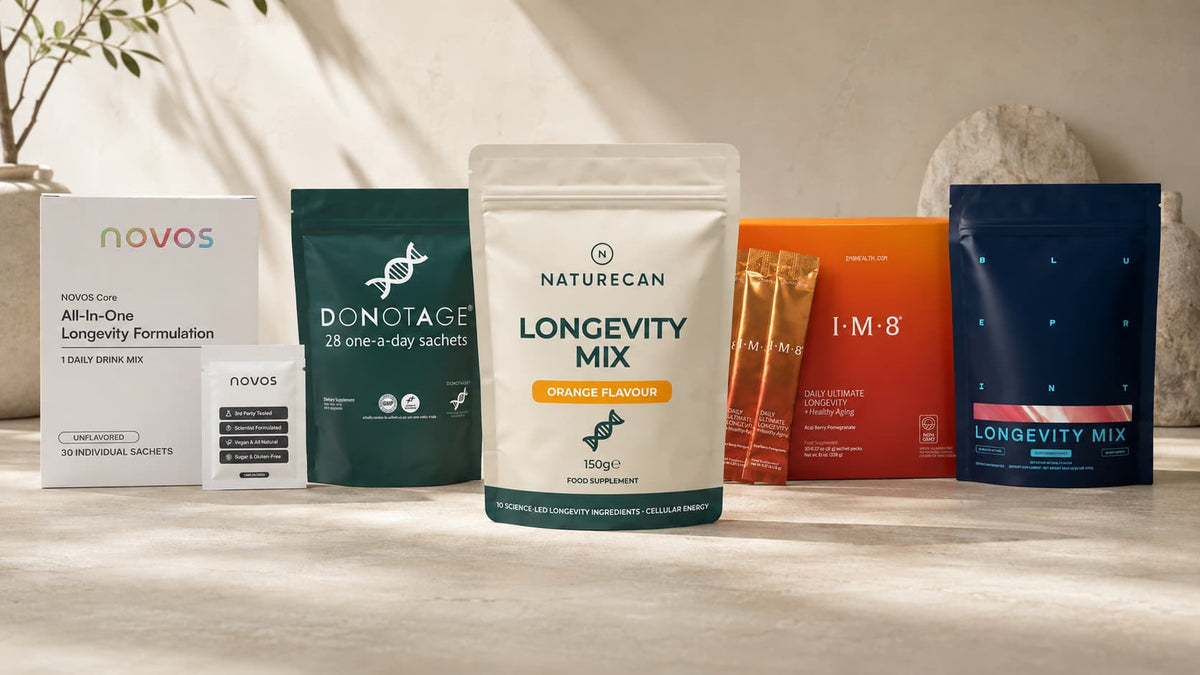
Longevity Mix Compared: What's Actually in IM8, NOVOS, DoNotAge, Blueprint & Naturecan
We compare the Longevity Mix formulas from Naturecan, IM8, NOVOS, DoNotAge and Blueprint side by side on disclosed ingredients, finished-product evidence, price and UK/EU safety rules, not marketing language.
Psyllium Husk: What It Is, Benefits, How to Use & Is It Safe?
What psyllium husk is, the evidence behind its benefits for digestion, cholesterol and blood sugar, and how to use it safely as a powder, whole husk or in capsules.
Ubiquinol vs CoQ10: What's the Difference and Which Should You Take?
Ubiquinol and CoQ10 are related but not identical - here's what the evidence says about absorption, benefits and how to choose the right form for your age and health.
What Is Inositol? Benefits, Uses & How to Take Myo-Inositol
Discover the evidence-backed benefits of inositol and myo-inositol for hormonal balance, PCOS and mood support, plus how to dose it safely and effectively.
Is Matcha Good for You? Benefits, and How to Use Matcha Protein
Is matcha good for you? Here's what the evidence says about matcha benefits, plus how to use matcha protein powder to get more from your daily routine.


