

 By Georgia Chappell · Reviewed by Paul Holmes · Updated 2 September 2026
Psyllium husk is a natural, soluble fibre made from the seed husks of the Plantago ovata plant. It forms a gel when mixed with water, which helps bulk and soften stools, support regularity, and may help manage cholesterol and blood sugar. It's sold as a powder, whole husk, or in capsules, and is generally safe when taken with enough water.
If you've seen psyllium husk mentioned as a fibre supplement, or even a weight management aid, you're not alone - search interest in psyllium husk has grown sharply in recent years. This guide covers what psyllium husk does in your body, the evidence behind its main benefits, how to take it safely in its different forms, and who should be cautious.
Naturecan
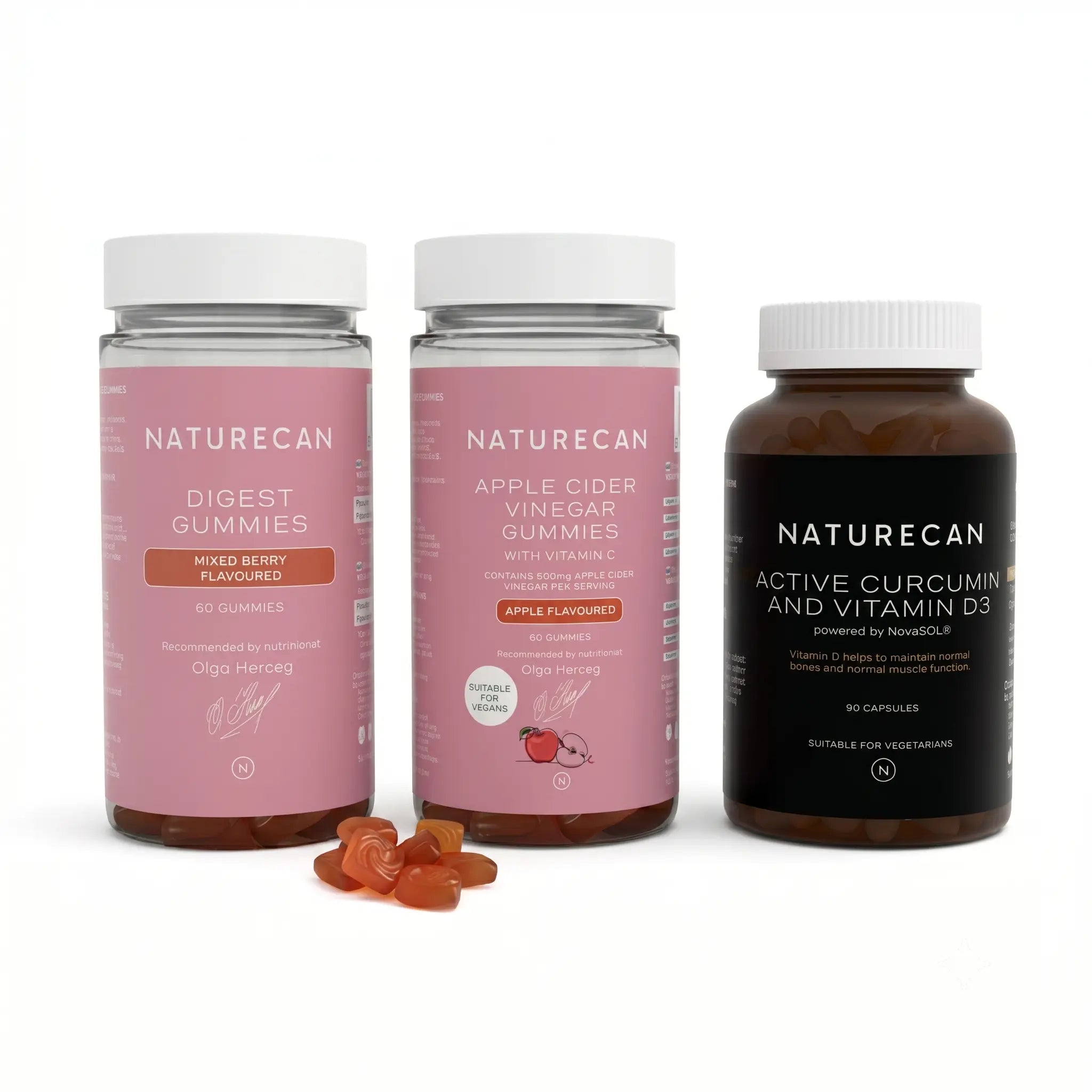
Gut Health Bundle
A fuss-free trio of Digest Gummies, Apple Cider Vinegar Gummies and Active Curcumin to support digestion, gut balance and overall comfort - a simple starting point if you're new to fibre and gut support.
Shop Gut Health BundleIn this article
- What Is Psyllium Husk?
- How Psyllium Husk Works in the Body
- Benefits of Psyllium Husk Explored
- How to Take Psyllium Husk
- Psyllium Husk and Medication Interactions
- Side Effects and Safety of Psyllium Husk
- Psyllium Husk vs. Other Fibre Supplements
- Naturecan Products Featuring Fibre Support
- The Bottom Line
- FAQ
What Is Psyllium Husk?
Psyllium husk is the outer coating (husk) of the seeds of Plantago ovata, a shrub-like plant grown mainly in India. It's classified as a soluble fibre, meaning it dissolves in water and forms a thick, gel-like substance in your gut, rather than passing through undigested like insoluble fibre. You may also see it labelled "ispaghula" or "ispaghula husk" on pharmacy products - this is simply the same pharmaceutical name for the same ingredient.

Soluble vs insoluble fibre: where psyllium sits
Dietary fibre falls into two broad categories. Insoluble fibre adds bulk and speeds up transit through the gut without dissolving. Soluble fibre, like psyllium, dissolves and gels, which slows digestion, helps bind water in the stool, and is linked to cholesterol and blood sugar benefits that insoluble fibre doesn't share to the same degree.
Psyllium husk powder vs whole husk vs capsules
Psyllium husk is available in three main forms, and the right one depends on your routine more than your goals - all three deliver the same fibre.
- Whole husk: the least processed form, often used in home baking (particularly gluten-free bread) for its texture and binding properties.
- Powder: milled husk, the most searched and most popular format, mixed into water, juice, or smoothies.
- Capsules: pre-measured husk in capsule form, convenient for travel or for those who dislike the texture of mixed psyllium.
How Psyllium Husk Works in the Body
Psyllium's effects come almost entirely from its gel-forming property. When it meets water in your gut, it swells and forms a viscous gel that changes how your digestive system behaves in several connected ways.
Gel-forming action in the gut
As the gel moves through the intestine, it adds bulk to stool and traps water within it, making stools softer, bulkier, and easier to pass.
Effect on stool bulk and transit time
By increasing stool water content and bulk, psyllium can normalise transit time in both directions, slowing down overly fast transit in some cases of diarrhoea.
Prebiotic and gut microbiome effects
Psyllium isn't just a bulking agent - it also interacts with gut bacteria. A 2019 study in the International Journal of Molecular Sciences found that seven days of psyllium supplementation altered stool water content, short-chain fatty acid levels, and the composition of gut microbiota in both healthy volunteers and people with constipation, with more pronounced changes in the constipated group (6).
Discover our Gut Health Bundle →
Benefits of Psyllium Husk Explored
Psyllium husk is one of the more thoroughly researched fibre supplements, with evidence spanning digestive health, heart health, and blood sugar management. Below are the main benefits, with the research behind each one.
Supports regular bowel movements
This is psyllium's best-established use. Its gel-forming action softens and bulks stool, making it easier to pass - the basis for its long-standing use as a bulk-forming fibre to support bowel regularity and stool consistency.
May help manage cholesterol levels
A meta-analysis of 28 randomised controlled trials, led by Jovanovski and colleagues and published in the American Journal of Clinical Nutrition, found that psyllium husk taken at 7-15g per day reduced LDL ("bad") cholesterol by around 7% (0.33 mmol/L), with larger reductions at higher daily doses (7). This builds on earlier work, including a 1988 controlled trial by Anderson et al. in Archives of Internal Medicine (1).
Supports blood sugar management
Psyllium significantly reduced fasting blood sugar (by 6.89 mg/dL on average) and HbA1c (by 0.75%) compared with placebo (4). In a separate 2015 meta-analysis, fasting glucose fell by 37.0 mg/dL specifically in people with type 2 diabetes, compared with a control group (5).
Psyllium husk for weight management
A 2016 satiety study tested three psyllium doses against placebo and found all three reduced hunger and increased fullness, with a dose-response relationship (2). However, a larger 2025 meta-analysis of 27 trials found a small but statistically significant increase in body weight across pooled trials (3) - the evidence for meaningful long-term weight loss is mixed rather than conclusive.
Why powder is the most popular format for benefits
Powder allows for flexible, precise dosing - you can adjust the amount gram-by-gram to match the doses used in clinical research (typically 7-15g/day for cholesterol and blood sugar benefits), which is harder to replicate exactly with a fixed capsule dose.
How to Take Psyllium Husk
However you take it, psyllium needs to be taken with plenty of water, and doses should be increased gradually to avoid bloating or gas.
Recommended dosage and building up gradually
Most clinical studies use total daily doses between 5g and 15g, often split across two or three doses before meals. A sensible starting approach is 5g once daily, mixed with at least 250ml of water, increasing gradually over one to two weeks as your gut adjusts.

How to use psyllium husk powder
Mix the powder into a full glass of water, juice, or a smoothie, and drink it fairly promptly - psyllium continues to thicken the longer it sits, so a drink left too long can become difficult to swallow. Taking it 15-30 minutes before a meal is the pattern most often used in research on appetite and satiety. Naturecan doesn't currently stock a dedicated psyllium husk powder, but its Activated Charcoal Capsules also support digestive comfort and can be a useful addition to a fibre-focused routine.
Psyllium husk capsules
Psyllium husk capsules offer a fixed, pre-measured dose and avoid the texture of mixed psyllium altogether, which makes them convenient for travel or for anyone who dislikes drinking a gel-like liquid. The trade-off is precision: because each capsule contains a fixed amount, matching a specific clinical dose (for example, 10g/day) may mean taking several capsules at once, and it's worth checking the label to see how many capsules equal one full serving. Naturecan doesn't currently offer dedicated psyllium husk capsules, but its Digest Gummies combine gut-supporting ingredients in an easy, on-the-go format if you'd rather skip powders and capsules altogether.
Capsules vs powder vs whole husk - full comparison breakdown
| Format | Best for | Considerations |
|---|---|---|
| Powder | Flexible, precise dosing; matching clinical study doses | Needs mixing and prompt drinking; some find the texture off-putting |
| Capsules | Convenience, travel, avoiding taste/texture | Fixed dose per capsule; may need several capsules per serving; still needs a full glass of water |
| Whole husk | Cooking and baking (e.g. gluten-free bread), least processed | Less convenient for a quick daily dose; texture is coarser than powder |
Best time of day to take Psyllium Husk
For digestive regularity, many people find it easiest to take psyllium in the morning or before their largest meal. For appetite and satiety benefits specifically, taking it 15-30 minutes before eating is the timing used in most research.
Psyllium Husk and Medication Interactions
Because psyllium forms a gel in the gut, it can also slow or reduce the absorption of some oral medications if taken at the same time.
Why timing matters
The same gel-forming action that helps bulk stool can also physically trap or slow the absorption of certain drugs taken alongside it, potentially reducing how much medication reaches your bloodstream.
General guidance on spacing psyllium from other medicines
As a general rule of thumb, it's sensible to leave a gap of at least one to two hours between taking psyllium and taking other oral medications - but exact timing can vary by drug, so this shouldn't be treated as specific medical advice for any particular medication.
When to speak to a pharmacist or GP
If you take regular prescription medication, have a diagnosed bowel condition, have difficulty swallowing, are pregnant or breastfeeding, or are due to have surgery, speak to a pharmacist or GP before starting psyllium husk.
Side Effects and Safety of Psyllium Husk
Psyllium husk is generally well tolerated, but it isn't completely without risk, particularly if taken incorrectly.
Common side effects
The most common side effects are bloating, gas, and stomach cramping, especially if you increase your dose too quickly. Starting low and increasing gradually largely avoids this.
Is Psyllium Husk safe?
Psyllium husk is generally well tolerated, with the most common side effects being mild bloating, gas, and stomach cramping - usually only if the dose is increased too quickly. Starting with a small amount and building up gradually, alongside plenty of water, largely avoids this. The main safety consideration is hydration: because psyllium absorbs many times its own weight in water, taking it without enough fluid can cause it to swell in the throat or gut, creating a choking or blockage risk, so it should always be taken with a full glass of water.
Who should be cautious
People with a diagnosed bowel obstruction, difficulty swallowing, or certain other bowel conditions should avoid psyllium unless a doctor has advised otherwise. It should also be used cautiously alongside certain medications, as noted above.
The importance of water intake
Psyllium absorbs many times its own weight in water. Taking it without enough fluid can cause it to swell in the throat or gut, creating a choking or blockage risk - always take it with a full glass of water (at least 250ml), and drink plenty of fluids throughout the day.

Psyllium Husk vs. Other Fibre Supplements
Psyllium is one of several soluble fibre supplements available, alongside options like inulin and glucomannan. Compared with these alternatives, psyllium has one of the largest and most consistent evidence bases specifically for cholesterol and blood sugar support, and tends to produce less gas than fermentable fibres like inulin, since it's only partially fermented by gut bacteria.
If you're looking at fibre supplementation more broadly rather than psyllium specifically, our full fibre supplement guide covers how different fibre types compare in more depth.
Naturecan Products Featuring Fibre Support
If you're looking to add more fibre to your routine, our range includes a few different options depending on your preference:
 Digest Gummies Gut Health Bundle
  Activated Charcoal Capsules
  DAO Supplement
 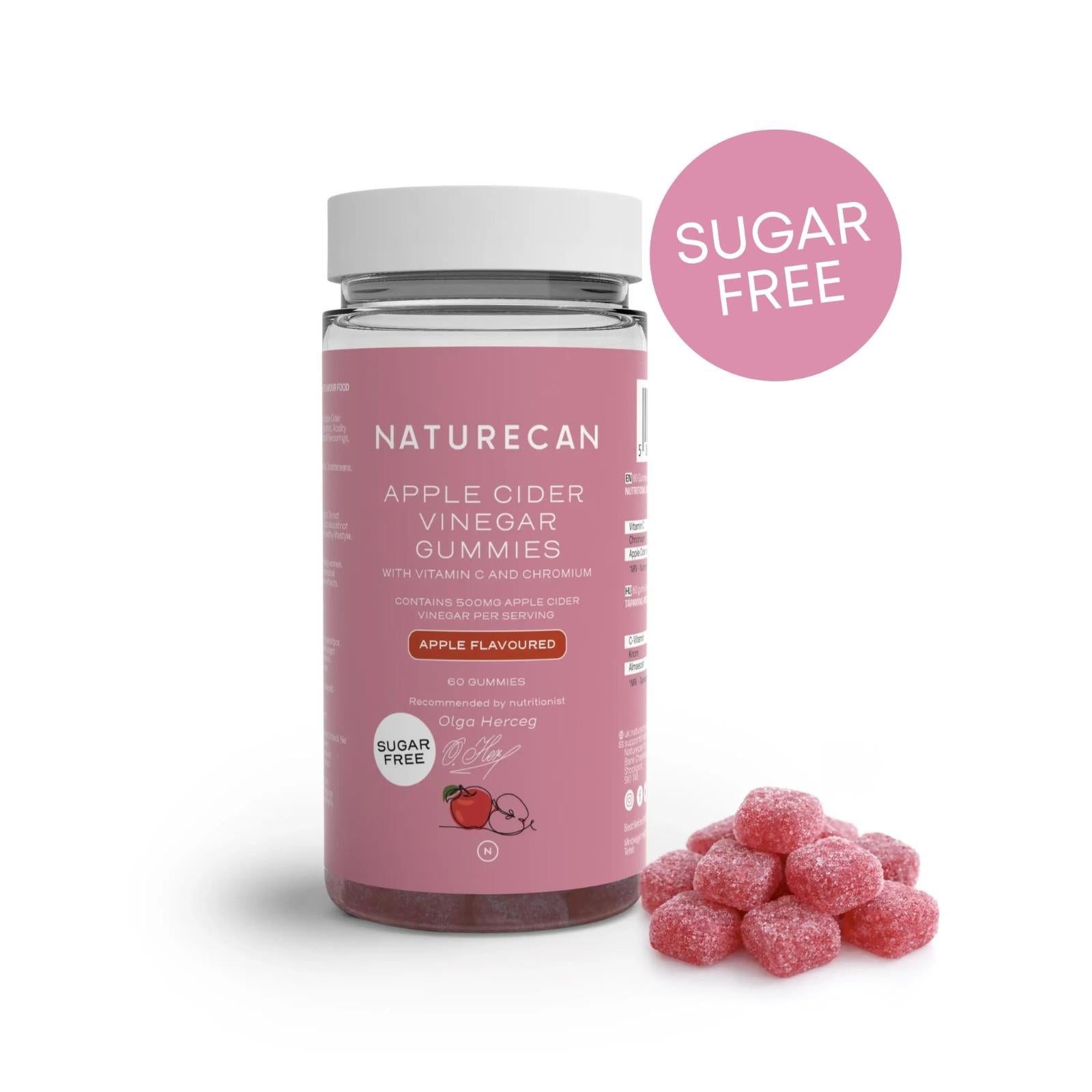 Apple Cider Vinegar Gummies
  Organic Ginger Supplement
  Active Curcumin
  Berberine
 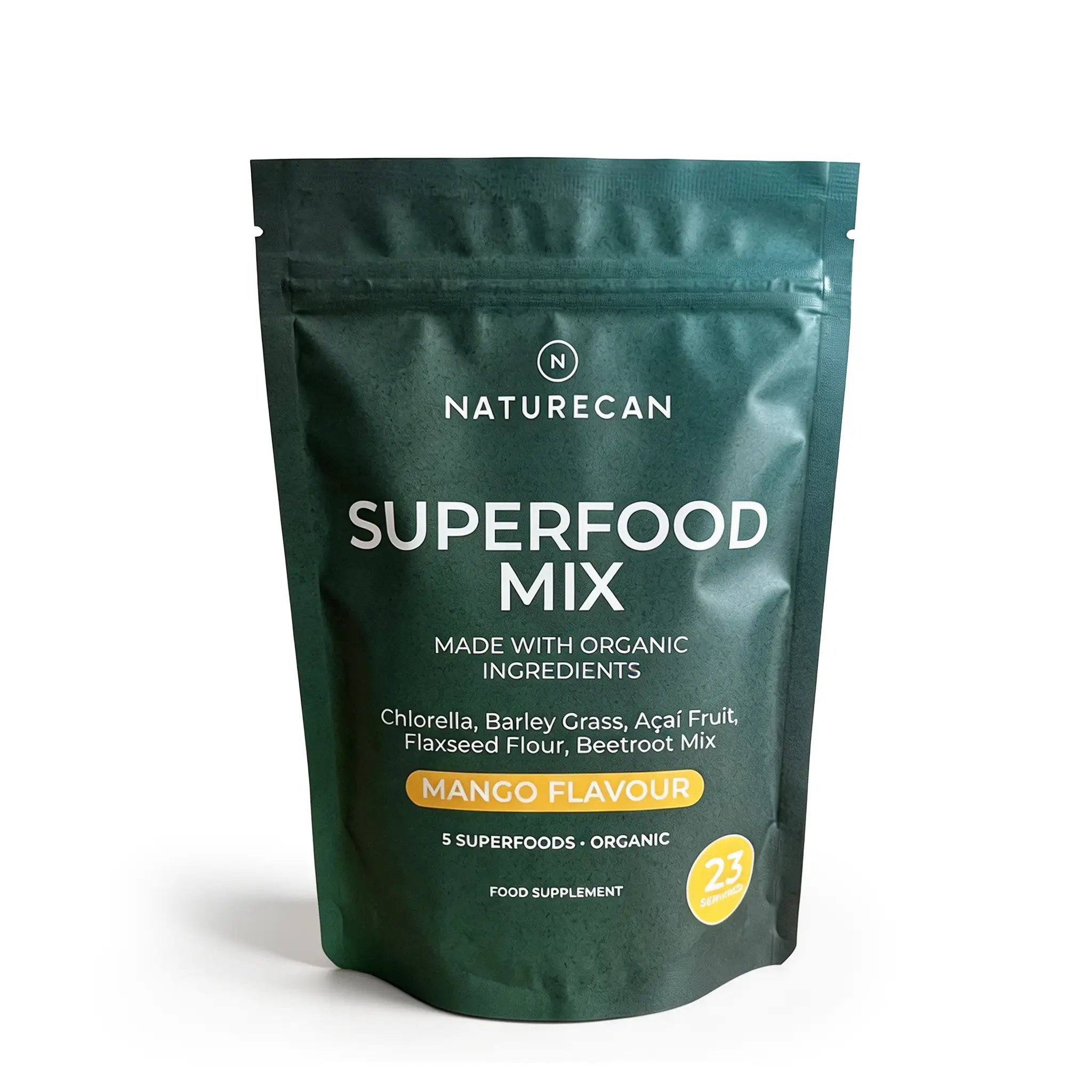 Organic Superfood Powder
 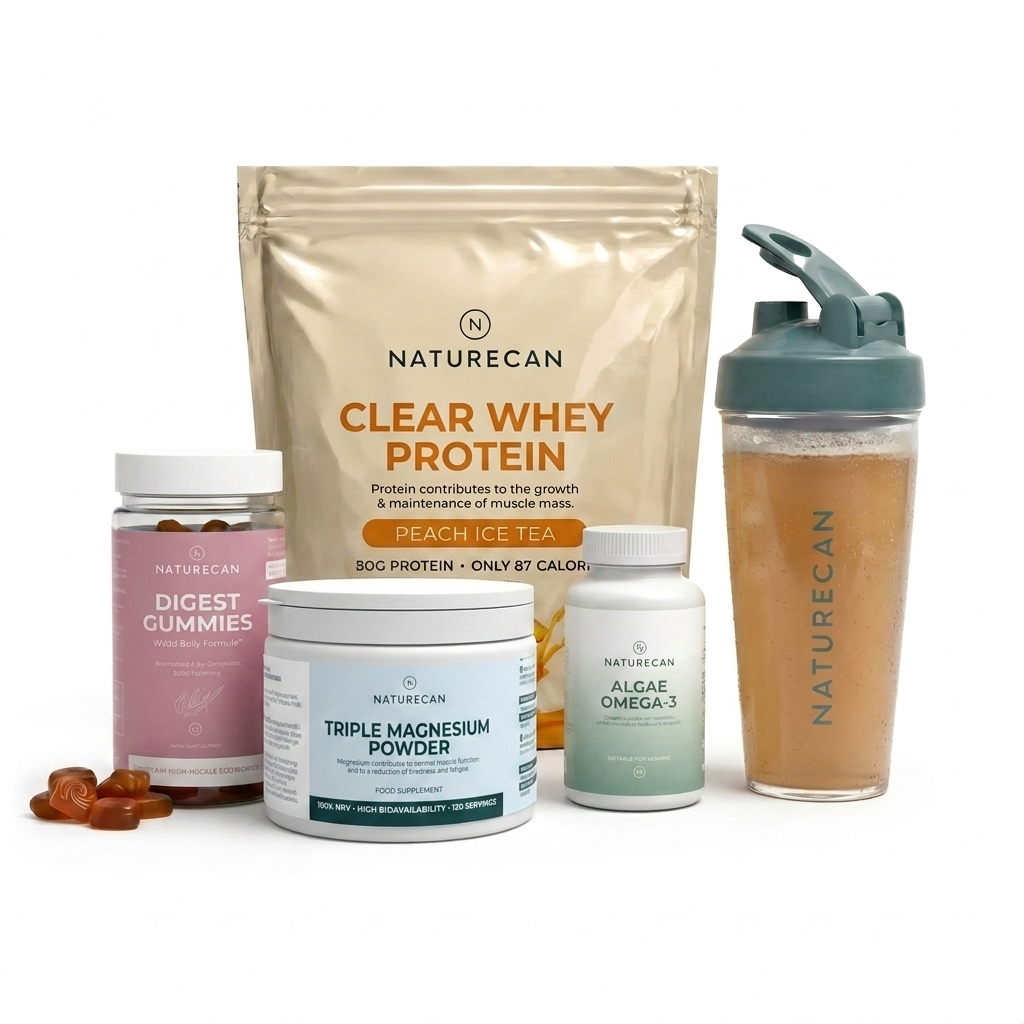 The GLP-1 Support Bundle
The Bottom Line
Psyllium husk is a well-researched, plant-based soluble fibre with solid evidence behind its role in digestive regularity, cholesterol management, and blood sugar support, and reasonable, if mixed, evidence for appetite control.
Whether you choose powder, capsules, or whole husk comes down to convenience rather than effectiveness, but however you take it, building up your dose gradually and drinking enough water are the two things that matter most for comfort and safety. If you're new to fibre supplementation more broadly, our fibre supplement guide and Gut Health Bundle are a good place to start alongside the guidance in this article.
Product Highlight
Gut Health Bundle
A simple, cost-effective way to support your gut from a few different angles at once: Digest Gummies for digestive enzyme activity and gut flora, Apple Cider Vinegar Gummies for digestion and pH balance, and Active Curcumin for anti-inflammatory support. Backed by science and third-party tested.
Shop Gut Health Bundle - £49.99FAQ
Is psyllium husk the same as a fibre supplement?
Psyllium husk is one specific type of fibre supplement. "Fibre supplement" is a broader category that also includes other soluble fibres like inulin and glucomannan, as well as insoluble fibre products.
Can you take psyllium husk every day?
Yes, psyllium husk is commonly taken daily, and most of the clinical research behind its benefits used daily dosing over several weeks or months. Start with a lower dose and increase gradually, and always take it with enough water.
Is psyllium husk vegan?
Yes, psyllium husk is a plant-derived fibre and is naturally vegan, though it's worth checking the full ingredients list of any specific product for added ingredients.
Does psyllium husk help with weight loss?
Psyllium may increase feelings of fullness in the short term, which is supported by clinical research. However, evidence on longer-term weight loss is mixed - at least one larger, more recent meta-analysis found a small increase in body weight across pooled trials, so it's best viewed as a supporting tool rather than a weight-loss solution on its own.
Can psyllium husk cause bloating?
Yes, particularly if you increase your dose too quickly. Starting with a smaller amount and gradually increasing over one to two weeks, alongside plenty of water, usually minimises this.
References
- Anderson, J.W., Zettwoch, N., Feldman, T., Tietyen-Clark, J., Oeltgen, P. and Bishop, C.W. (1988) 'Cholesterol-lowering effects of psyllium hydrophilic mucilloid for hypercholesterolemic men', Archives of Internal Medicine, 148(2), pp. 292-296.
- Brum, J.M., Gibb, R.D., Peters, J.C. and Mattes, R.D. (2016) 'Satiety effects of psyllium in healthy volunteers', Appetite, 105, pp. 27-36. Available at: https://doi.org/10.1016/j.appet.2016.04.041
- Gholami, Z. and Paknahad, Z. (2025) 'The effect of psyllium consumption on anthropometric indices: a systematic review and dose-response meta-analysis of randomized controlled trials', Journal of Health, Population and Nutrition, 44, article 372. Available at: https://doi.org/10.1186/s41043-025-01103-x
- Gholami, Z., Clark, C.C.T. and Paknahad, Z. (2024) 'The effect of psyllium on fasting blood sugar, HbA1c, HOMA IR, and insulin control: a GRADE-assessed systematic review and meta-analysis of randomized controlled trials', BMC Endocrine Disorders, 24, article 78. Available at: https://doi.org/10.1186/s12902-024-01608-2
- Gibb, R.D., McRorie, J.W., Russell, D.A., Hasselblad, V. and D'Alessio, D.A. (2015) 'Psyllium fiber improves glycemic control proportional to loss of glycemic control: a meta-analysis of data in euglycemic subjects, patients at risk of type 2 diabetes mellitus, and patients being treated for type 2 diabetes mellitus', American Journal of Clinical Nutrition, 102(6), pp. 1604-1614. Available at: https://doi.org/10.3945/ajcn.115.106989
- Jalanka, J., Major, G., Murray, K., Singh, G., Nowak, A., Kurtz, C., Silos-Santiago, I., Johnston, J.M., de Vos, W.M. and Spiller, R. (2019) 'The effect of psyllium husk on intestinal microbiota in constipated patients and healthy controls', International Journal of Molecular Sciences, 20(2), article 433. Available at: https://doi.org/10.3390/ijms20020433
- Jovanovski, E., Yashpal, S., Komishon, A., Zurbau, A., Blanco Mejia, S., Ho, H.V.T., Li, D., Sievenpiper, J.L., Duvnjak, L. and Vuksan, V. (2018) 'Effect of psyllium (Plantago ovata) fiber on LDL cholesterol and alternative lipid targets, non-HDL cholesterol and apolipoprotein B: a systematic review and meta-analysis of randomized controlled trials', American Journal of Clinical Nutrition, 108(5), pp. 922-932. Available at: https://doi.org/10.1093/ajcn/nqy115


